About
A sitrep, as we called it in the sector: a short report on what had happened in one place over a few days, written under pressure for readers several time zones away who would make decisions on the strength of it.
Where it started
I started writing stories for World Vision in Juba in 2008, and the situation reports came soon after. Each one had to answer three questions for a reader far away: what happened, what we knew for certain, and what was still being checked. When I got those right, a country director could decide by nightfall. When I got them wrong, the people waiting in the field paid for it.
That discipline has stayed with me for eighteen years. Today I build AI systems, and each one works like a sitrep with a new author. The machine writes the first draft in seconds. A person still has to sort what is known from what is uncertain, and check what is still being verified, before anything goes out.
From humanitarian communication to building with AI, with the same commitment to clarity.
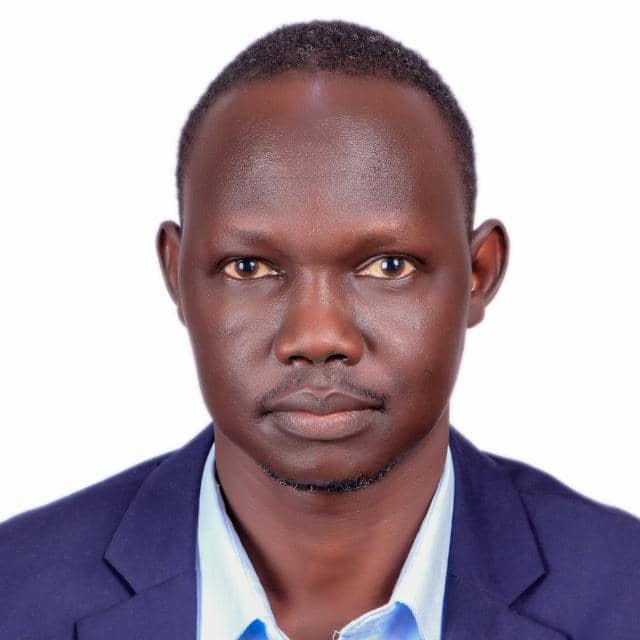
I am a former humanitarian communicator who now builds AI tools for professionals, small companies and NGOs, and writes about using them well, with a bias for clarity, safety, and lifelong learning.
For more than fifteen years, I worked across humanitarian and development programs in East Africa, with the majority of that time spent between South Sudan, Kenya, and Uganda. My work covered research coordination, communication support, information products, reporting, and cross-team collaboration that stretched from field offices to global headquarters.
Today I apply the same discipline to AI. Since July 2026 I have been AI & Automation Engineer at Nile Automate, where we set up AI systems for small businesses and professionals, with a person checking the work before anything goes out. On this site I write about what those builds take, what breaks, and who is left outside, so that the work, including its uncertainty, is part of the record.
Quick facts
Places worked
South Sudan (Juba), Kenya (Nairobi), Uganda (Kampala), with remote collaboration in Geneva, New York, Washington, London, Australia, and New Zealand.
Organisations
World Vision · AECOM · Management Sciences for Health · DT Global · REACH · IMPACT Initiatives · Nile Capital · Nile Automate
Fields
AI products and workflow automation · Local and open-source AI · Humanitarian and development communication · Assessment and research coordination · Pharmaceutical supply systems · Media and cultural studies · Operations for distributed teams
My background
My professional foundation was built in humanitarian and development communication, and it was built at a desk, on a deadline, under editors who returned drafts with notes like "this paragraph does not tell me anything I can act on."
I remember the specific Monday it became clear to me what actionable writing actually was. It was 2016, Juba, and I was producing a situation report that had to carry the most recent displacement figures, the status of a pending emergency escalation, a summary of access restrictions in three counties, and a note about a rumoured attack in a fourth. The country director needed it by nightfall. What I learned at that desk was that my job was not to wait for the information to stabilise. It was to write clearly about what was known, explicitly about what was uncertain, and usefully about what was still being verified. A sentence that looked thorough but required a clarifying phone call had failed. A sentence that was accurate but buried the decision the reader needed to make had also failed.
The REACH February 2017 Briefing Paper, which remains the clearest single specimen of that discipline I produced, was not written on company time. Before REACH offered me the position, they sent raw field data and asked me to produce a situation report within a set timeframe. What I submitted earned me the job.
The environments were demanding. Displacement responses, cross-border coordination, emergency information needs, and long-cycle development programs, each with different stakeholders, different timelines, and different tolerances for ambiguity. I worked with colleagues and partners connected to teams in Geneva, New York, Washington, London, Australia, and New Zealand.
Over fifteen years I held roles that covered research design and assessment (REACH, IMPACT Initiatives), field-level communication and reporting (World Vision, AECOM), pharmaceutical supply and systems communication (Management Sciences for Health, SIAPS program), and development program reporting (DT Global). Each organisation taught something slightly different. The common thread was handling complexity under deadline, turning field realities into clear communication products, and keeping distant decision-makers honestly informed.
Clarity is not cosmetic. It is operational. A sentence is a proxy for a decision. Writing that is careless, vague, or unclear quietly costs the people who depend on it.
The crypto years
My move into crypto began with a cousin who has spent most of his working life in technology and was willing to teach me everything he knew. I had started the transition before USAID closed the tap and the humanitarian sector shed staff overnight, which gave me a head start many colleagues never got. From 2023 I worked at Nile Capital on crypto research, investor education and product, and built Betzone into a licensed business in Juba. Crypto taught me to build: to scope a product, coordinate developers, work with government and launch something real.
The move to AI
A friend in Juba asked me this year which AI model he should use. I told him what I use every day: Claude, from Anthropic, or OpenAI's GPT. A few days later he came back. He had tried both and could use neither. Most of these companies do not accept cards issued in South Sudan, and even with another way to pay, you still need a strong VPN to reach them.
That conversation explains most of why my work moved. AI arrived carrying the problem I had met in humanitarian work and again in crypto: people making real decisions with tools that are explained badly, or kept out of their reach. I started using ChatGPT in 2022 for research and summaries. By 2026 I was spending whole days building with AI, and the word magic never fit what I saw. Building with AI means hours of telling the machine what to fix and what to leave alone, testing, finding what broke, and telling it again.
That slow loop is where my old training earns its place. Humanitarian reporting taught me to check sources, to write down what I did not yet understand, and to test every claim against what people on the ground actually did. Building with AI asks for the same habits, every hour.
In September 2026 I paused my own Claude subscription and moved much of my daily work to a free open-source model running on my own laptop. The frontier models still reason better, and I still reach for them on the hardest tasks. For a large share of ordinary work, the local model does the job offline and at no cost, which matters a great deal to readers in Juba, Kampala and Nairobi.
What I have built
Most of what I build now, I build with Claude and Codex. The first system was for myself. One morning I pasted eighteen years of working life into Claude, from writing stories for World Vision in Juba in 2008 through REACH, DT Global, IMPACT Initiatives and Nile Capital, and asked it to update my CV and search for work every morning at eight. Among the first results were two Assessment Officer roles with REACH in Juba, the work I did in that same city for more than four years.
That experiment grew into Kazi Board, a tool that helps job seekers find verified opportunities and prepare their applications. In its first quiet week with a small group of testers, 31 people joined, 12 CVs were created, 100 verified job matches were found and 24 application drafts were prepared. The figure I value most sits behind those numbers: people trusted an unfinished product with something as personal as their job search.
Oxbow Studio is a video editor with Claude built in. You describe the cut you want in one sentence, and it picks the shots, cuts on the beat, adds captions and exports for each platform, all on your own computer. Bookurah packages the betting software and odds data from the Betzone years into a turnkey sportsbook that operators in Africa can buy outright. One of my AI products already earns money, which is the clearest test I know that a build is useful.
The earlier build: Betzone
In 2023 the CEO of Nile Capital gave me a brief that sounded simple: take Betzone, an online betting startup the company was developing, and build it into a business. I started the way I always had in the humanitarian sector, by researching the environment before moving. Betzone's original concept was a crypto-based lottery platform. I approached the industry the way I had approached food-security dynamics in Jonglei State, triangulating primary sources and being explicit about what I knew, what I was inferring, and what I did not yet have good evidence for. The research pointed toward sports betting, and we built the platform in-house after third-party licensing costs proved prohibitive.
I ran marketing, developer coordination, government engagement for the licences, and reporting back to Nile Capital's leadership at the same time. Each one was a humanitarian skill, re-pointed. Regulator engagement looked a great deal like donor engagement. Marketing in Juba looked a great deal like information-product dissemination, down to working with the raksha drivers who carry most of the city's daily traffic, so that their vehicles became a mobile advertising layer across the city.
Betzone is now South Sudan's licensed sports betting platform, with a live website, a mobile app and a shopfront in Juba, covering real and virtual football. The virtual matches use AI-rendered footage, which is where much of my AI building began.
What I am working on
Everything I am working on now is AI, and all of it keeps a person in the loop.
- Kazi Board: verified job matches and application drafts for job seekers
- Oxbow Studio: a video editor with Claude built in that runs on your own computer
- AI systems for small businesses, professionals and NGOs at Nile Automate
- Guides to running open-source AI models on an ordinary laptop
- Writing on using AI at work while keeping your own judgement
The aim is to be useful: the kind of builder who raises the quality of the work around them and leaves a clear record of how it was done.
Editorial principles
Clarity over performance
If something is worth saying, it should be understandable. Every piece on this site gets a final read with one question in mind: could a smart reader with no background in the topic follow this without feeling talked down to?
Safety over hype
AI output can look finished and still be wrong. A confident draft nobody checked can cost someone a job application, a client or a decision. I name the limits of a tool in the same sentence as its promise, and I keep a person checking the work before anything goes out.
Learning over posturing
This site documents serious learning in progress. The uncomfortable middle stays visible on purpose, including the builds that broke and the tools I stopped using.
Substance over speed
A new model arrives almost every week. Some ideas still deserve slower writing, and some decisions deserve slower readers. Essays go out when they are ready.
Lifelong growth
A career can move across fields. Skills transfer, deepen, and evolve, and the transition itself is often where the most useful thinking happens. This site is built around that conviction.
Who this is for
This site is for readers who want to use AI well.
- Professionals, small companies and NGOs who want AI to do real work
- People who cannot pay for, or reach, the big AI platforms and want AI on their own machine
- Communicators trying to explain complex systems clearly
- Humanitarian and development professionals considering a move, including into AI work
- Builders who value practical thinking and a clear record of how the work was done
If you have ever read a confident piece about AI and come away less clear than before, or watched a tool produce something that looked right and turned out wrong, this site is probably for you.
How to get in touch
I take on selective work setting up AI systems for professionals, small companies and NGOs, along with writing and communication work about AI. If you think a conversation would be useful, the most direct way to reach me is email.
Response time
Usually within a few days. Slower during writing cycles.
If you are reaching out about collaboration, please include one or two sentences on what you are working on, what you think I could help with, and any timelines, so the first reply can get straight to the useful part.
Closing note
I am still learning, still building, and still refining the bridge between past experience and new work.
This site is part record, part laboratory, and part public notebook. The goal is to be useful, to the reader and to the version of myself who will read this back in a few years and see exactly where the work stood on this particular day.